The Art of Persian Chai: A Cultural Tapestry of Taste and Tradition
In the heart of the Middle East, specifically within the borders of Iran, tea—or Chai—is not merely a beverage; it is the lifeblood of social interaction and the ultimate symbol of hospitality. Whether found in a bustling city bazaar or a remote mountain village, the presence of a steaming glass of tea signifies a warm welcome. This tradition, rooted in centuries of history, has evolved into a sophisticated ritual that blends sensory delight with deep-seated cultural values.
The Historic Journey to the Pot
While tea is synonymous with Persian culture today, it was once an exotic luxury. For centuries, coffee was the dominant beverage in the region. However, the proximity to the Silk Road and the difficulty of transporting coffee beans eventually led to a shift in preference. By the late 19th century, tea had claimed its place as the national drink. This transition was solidified by Prince Kashef Al-Saltaneh, who is often credited with smuggling tea saplings from India into the northern Iranian province of Gilan. The humid, misty climate of the Caspian Sea coast proved perfect for cultivation, giving birth to a domestic industry that continues to thrive today.
The Ritual of the Brew
The preparation of Persian tea is an exercise in patience. Unlike the quick steeping common in Western cultures, Persian Chai requires a two-tiered system, often involving a samovar or a specialized kettle set.
- Concentration: Loose-leaf black tea is placed in a porcelain teapot with a small amount of boiling water.
- Indirect Heat: The teapot is placed atop the boiling kettle, allowing the leaves to open and release their essence through gentle steam rather than direct boiling. This prevents the tea from becoming bitter.
- Aromatics: Many households add a personal touch by including a single cardamom pod, a shard of cinnamon, or a few dried rose petals to the pot, creating a complex, floral bouquet.
A Feast for the Eyes: The Estekan
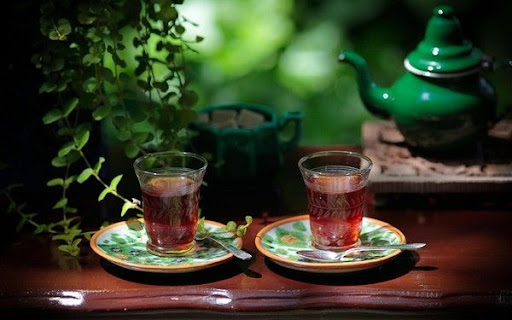
As seen in the traditional setup, presentation is paramount. Tea is almost exclusively served in estekan—small, narrow-waisted transparent glasses. The clarity of the glass allows the host and guest to admire the color, which should ideally be a deep, transparent «deer’s eye» red. This visual check ensures the tea is brewed to perfection. The glasses are always accompanied by decorative saucers to catch any spills and to hold the essential accompaniments.
The Sweet Side of Chai
Persian tea is rarely consumed with milk. Instead, the bitterness of the black tea is balanced with various sweeteners. The most traditional method is using ghand (beet sugar cubes). Rather than dissolving the sugar in the tea, many Iranians place a cube between their front teeth and sip the hot liquid through it—a practice known as ghand-pahlu. Alternatively, Nabat (saffron-infused rock candy on a stick) is stirred into the glass, imparting a golden glow and a distinct honey-like flavor.
More Than Just a Drink
In a Persian home, the teapot is rarely cold. It is the first thing offered to a visitor and the last thing shared before a guest departs. It bridges gaps between generations and facilitates everything from casual gossip to serious business teatimeus.com negotiations. To drink tea in this tradition is to participate in a legacy of kindness, where every glass poured is an invitation to stay a little longer and speak a little deeper.
Would you like to explore specific recipes for aromatic Persian blends, or perhaps a guide to the best types of sweets like Sohan or Gaz to serve alongside?